What Annex IV actually requires
The record-keeping obligations for high-risk AI systems, in plain language. Four short pages.
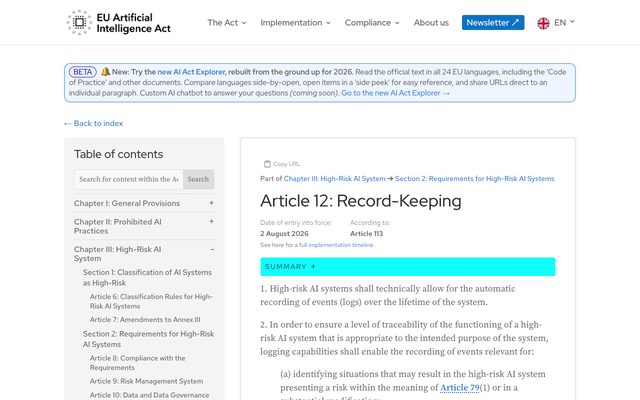
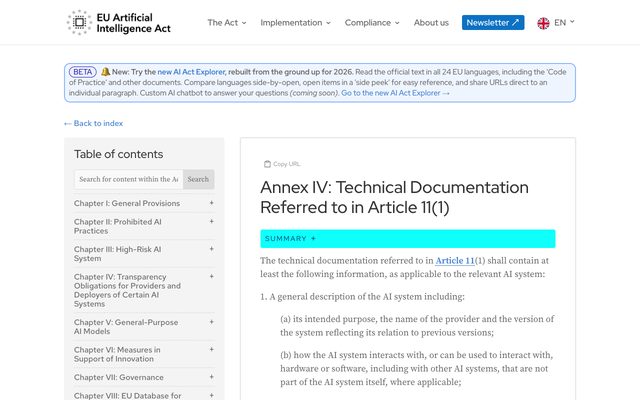
Annex IV and Article 12
Annex IV is the technical documentation a provider of a high-risk AI system has to compile and keep current, under Article 11(1). It covers how the system was built and tested, how it performs, and how it changed across its lifecycle. It also covers how you monitor it in use.
Article 12 sits alongside it. It requires a high-risk AI system to record events automatically, for the life of the system. The record must keep the system traceable, to a degree that suits its purpose.
What it asks for in practice
The obligation is to show what the system did, traceably, after the fact. Not to show that a policy exists. When someone questions a decision, you must reconstruct the events behind it. That means the inputs, the steps, the system version in use, and every point where a person intervened.
Article 12 says the logs must keep the system traceable. Annex IV says the documentation must track every change to the system over time. Both point at the same thing. The record must hold up when someone reads it later, someone who was not in the room.
Policies are not a record
Most teams have a policy and a dashboard. Neither reconstructs what an agent actually did on a given run. A policy states intent. A dashboard shows aggregates. Article 12 asks for the run itself.
Arkna fills that gap. It produces a replayable, hash-chained record of what an agent did, step by step. A reviewer can check it independently. Whether the decision was right stays with your reviewers and advisors; Arkna supplies the record they judge it against.
Read the official text
Regulation (EU) 2024/1689. Every claim on this page traces to the text below.